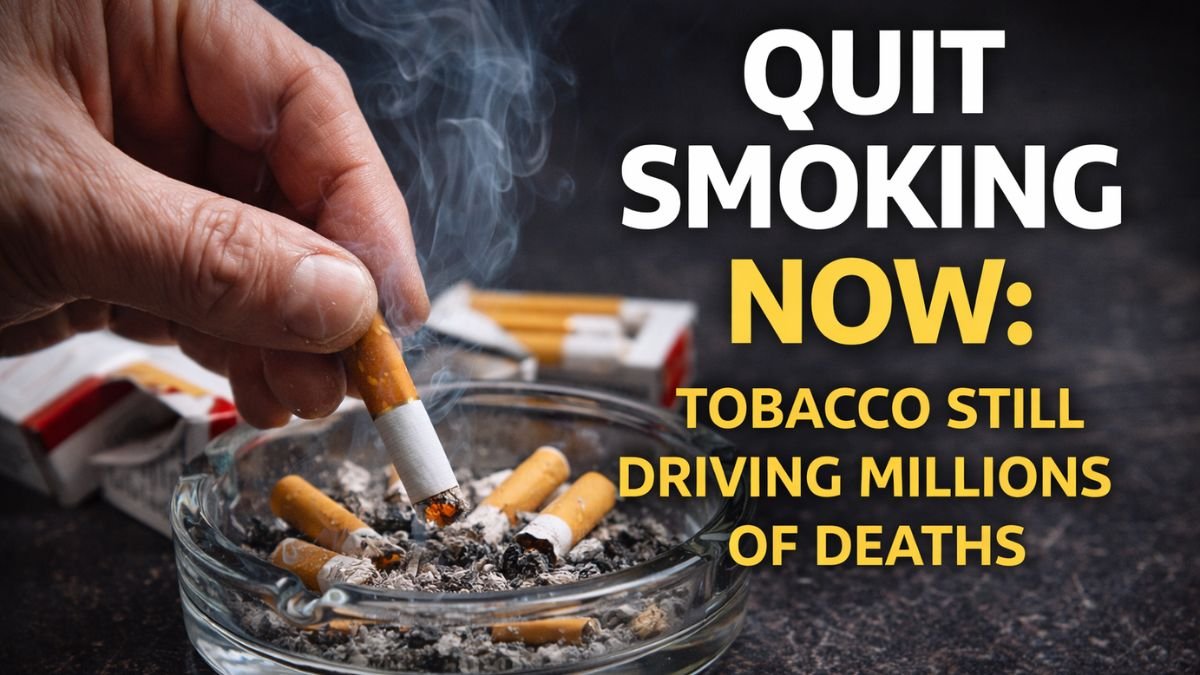
For decades, the message has remained the same — yet the numbers remain troubling.
Health authorities continue to report that tobacco use is one of the leading causes of preventable deaths globally. Despite awareness campaigns, graphic warnings and higher taxes, millions of people continue to smoke.
Doctors and public health experts say the advice is simple but urgent: Quit Smoking Now.
Smoking Deaths Worldwide Remain a Major Public Health Crisis
According to global health data, tobacco use contributes to millions of deaths every year. It increases the risk of life-threatening conditions and places a heavy burden on healthcare systems.
The concern is not limited to long-term heavy smokers. Regular smoking — even in smaller amounts — significantly increases the risk of:
-
Heart disease
-
Stroke
-
Chronic lung disease
-
Multiple cancers
Health experts say smoking deaths worldwide are largely preventable — which makes the issue even more serious.
Cancer Caused by Smoking Goes Beyond the Lungs
Most people associate smoking with lung cancer. But medical research shows that cancer caused by smoking can affect many parts of the body.
These include:
-
Mouth and throat
-
Esophagus
-
Bladder
-
Pancreas
-
Kidney
-
Stomach
Tobacco smoke contains thousands of chemicals. Many of them are toxic, and some directly damage DNA. Over time, this damage can turn normal cells into cancer cells.
Second-hand smoke also increases cancer risk in non-smokers, including children living in smoking households.
Smoking Health Risks Impact the Entire Body
Experts say the smoking health risks are not limited to cancer.
Smoking affects:
-
Blood circulation
-
Heart function
-
Brain health
-
Immune system strength
-
Reproductive health
-
Skin and aging process
Nicotine increases heart rate and blood pressure, putting extra strain on the cardiovascular system. Over time, arteries can narrow, increasing the risk of heart attack and stroke.
Doctors also warn that smoking weakens the immune system, making it harder for the body to fight infections.
Why Health Authorities Are Renewing Their Call
Public health campaigns are now focusing not only on awareness but also on support systems to help people quit.
With rising healthcare costs and growing lifestyle diseases, many countries are strengthening anti-smoking policies, increasing restrictions and promoting cessation programs.
Experts say prevention is far more effective than treatment.
That is why they continue to repeat the message in strong terms: Quit Smoking Now, not later.
Benefits of Quitting Smoking Start Earlier Than Many Realize
One of the most encouraging facts is that the benefits of quitting smoking begin almost immediately.
-
Within hours: Oxygen levels improve
-
Within days: Harmful carbon monoxide levels drop
-
Within weeks: Breathing becomes easier
-
Within months: Circulation improves
-
Over time: Risk of heart disease and cancer decreases
The earlier a person quits, the greater the long-term benefit.
Medical professionals stress that it is never too late to stop — but earlier is always better.
A Lifestyle Decision With Long-Term Consequences
Smoking is no longer viewed as just a personal habit. It is considered a major lifestyle risk factor that affects families, public health systems and national economies.
Health experts say reducing tobacco use remains one of the most effective ways to lower preventable deaths.
The science has been clear for years.
The numbers are still rising.
And the message remains unchanged:
Quit Smoking Now.